
Guide
When Is the Best Time to Install Solar Panels on a Mobile or Manufactured Home?
When Is the Best Time to Install Solar Panels on a Mobile or Manufactured Home?
The short answer
For most manufactured and mobile home owners in the US, September and October are the best months to sign a solar contract. Installer queues shrink to their shortest stretch of the year outside of deep winter, permitting offices clear their spring/summer backlog, and a system installed in early fall is fully energized well before the March solar production ramp-up. But timing for factory-built housing isn't just about weather and installer calendars — it's also shaped by roof load rules under the federal HUD code and a major 2026 change to the federal tax credit that changes the financial math for anyone buying outright.
Why fall beats summer for scheduling
Solar demand follows a predictable curve every year. Homeowners start calling installers as soon as the weather warms up, and by June crews are booked out for months.
Based on installer scheduling data, typical contract-to-installation queue times run:
- Winter (Dec–Feb): 2–4 weeks — the shortest wait of the year, though cold and snow can slow roof work
- Spring (Mar–May): 3–8 weeks and climbing fast as the seasonal rush builds
- Summer (Jun–Jul): 6–10 weeks, the year's worst bottleneck, compounded by summer roof heat and vacationing permit-office staff
- Fall (Sep–Oct): 3–5 weeks — installer backlogs drop by up to half compared to the summer peak, and weather is still stable enough for roof or ground work
Counting the full path from signed contract to utility Permission to Operate (PTO) — site survey, engineering, permitting, physical install, inspection, and interconnection — takes 7 to 12 weeks under normal conditions, stretching to 10–16 weeks at the summer peak. Booking in September or October means a manufactured home owner is typically producing power well before spring, without ever touching the worst of the summer queue.
Mobile and manufactured homes play by different structural rules
This is where timing advice for a typical site-built house stops applying cleanly. Homes built before June 15, 1976 are legally "mobile homes" with no standardized federal structural code. Homes built on or after that date are "manufactured homes," governed by the federal HUD Code (24 CFR Part 3280) — and that code sets roof load limits that were never designed with rooftop solar in mind.
Under 24 CFR § 3280.305, manufactured home roof trusses are engineered to one of three regional load zones:
- South zone: 20 psf total design roof load
- Middle zone: 30 psf, with a modest snow allowance
- North zone: 40 psf, for heavier snow country
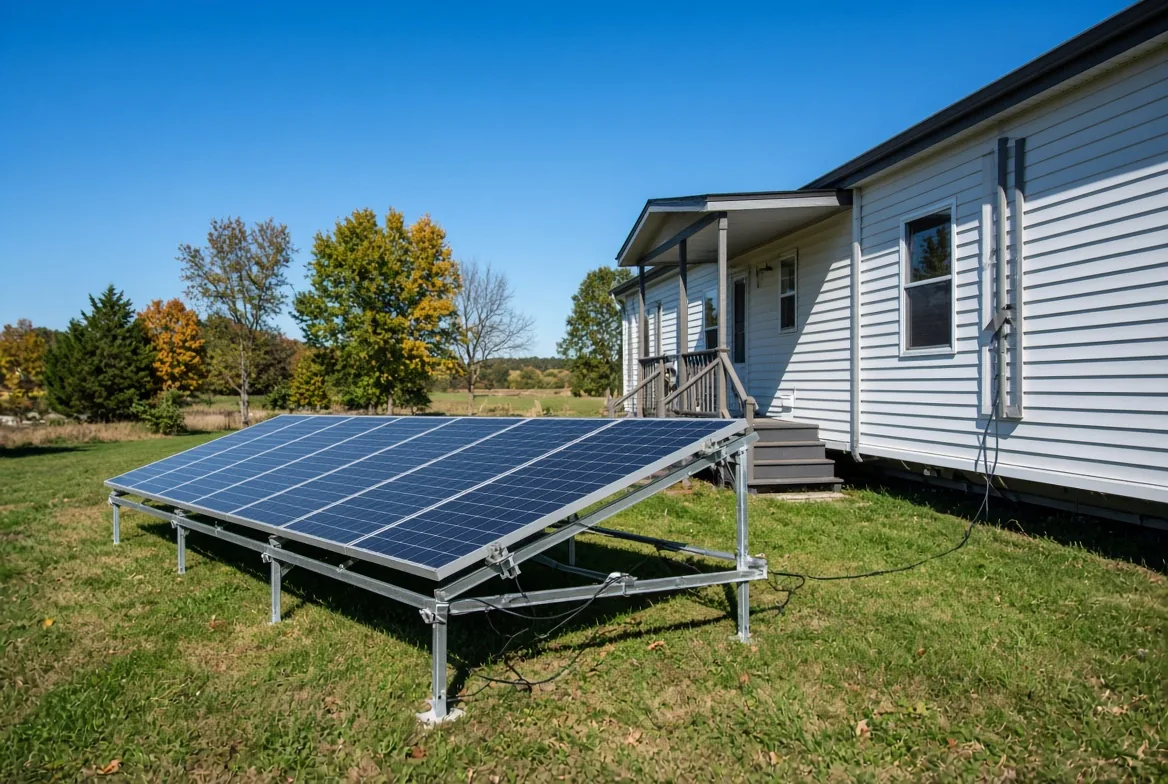
Critically, that 20 psf figure in the South zone is a roof-access live load — meant for someone walking on the roof for maintenance — not a spare dead-load allowance for permanently mounted equipment. A standard rigid residential solar module (around 49 lbs each, roughly 2.5–4 psf once racked) can eat directly into that already-thin margin, which is why installers on HUD-code homes routinely require a Professional Engineer's stamped structural letter before pulling a permit. Lightweight flexible or CIGS panels (as little as 3.75–4.3 lbs per module) or a ground-mounted array (roughly 15–25% more expensive but sidestepping roof limits entirely) are common workarounds when a truss can't support standard glass-and-aluminum panels.
In states with centralized manufactured-housing oversight, such as California's Department of Housing and Community Development (HCD), there's an added layer: a separate alteration permit (Form HCD MH 415), the same PE-stamped engineering review, and — for homes in leased-lot communities with park-owned utilities — a park owner's signature on Form HCD 50 plus a filing fee before interconnection can even be requested.
Before winter or after? Weighing the trade-off
Installing in fall means capturing off-season contractor pricing and a fast permitting lane, but the system will generate less during its first few months in service — November through January output can run 45% to 80% below summer peaks, depending on latitude (a Phoenix, AZ system loses about 45% versus its summer output in winter; a Chicago or Seattle system can lose 65–80%). Waiting until spring guarantees stronger early production but walks straight into the 6–10 week spring/summer installer backlog, often pushing final PTO into late fall anyway. For most manufactured home owners, locking in a fall install date — even knowing winter output will be modest — gets the system live and earning sooner overall.
A 2026 tax-credit deadline changes the calculus
The math shifted in 2026. The Section 25D federal tax credit — the 30% credit for homeowners who buy a system outright with cash or a loan — expired for any residential solar system placed in service after December 31, 2025. A system purchased and installed in 2026 no longer qualifies, regardless of when the contract was signed (systems completed in 2025 or earlier keep any unused credit as a carryforward).
Third-party-owned systems — solar leases and power purchase agreements — still have a path: under Section 48E, a leasing company that starts construction before July 4, 2026 and places the system in service by December 31, 2027 keeps the 30% commercial credit, which can lower monthly lease payments. For a manufactured home owner weighing purchase timing in late 2026, that makes a lease or PPA worth comparing seriously against a cash purchase, since the direct-ownership credit is simply gone.
Bottom line
Target a September or October contract signing to get the shortest queue, the calmest permitting season, and a system energized ahead of spring. Before signing anything, confirm your home's manufacture date, get a structural engineer's read on your roof's load zone, and — since the 30% ownership tax credit ended for 2026 installs — run the numbers on a lease or PPA alongside a cash purchase.