
Buyer's guide
Best Solar Panels for Mobile Homes (2026): Lightweight, CIGS & DIY Kits Ranked
Quick answer
The best solar panel for most mobile homes is the BougeRV Yuma 200W CIGS Flexible Panel ($587.49): a 200W CIGS Thin-Film panel at 8.44 lbs that bonds flat to the roof and adds under 0.5 psf. For a complete DIY system, pick the Renogy 400W Starter Kit ($493.74); for a ground mount, the HQST Compact Bifacial 200W ($162.49). Lightweight flexible & CIGS panels are the safest rooftop choice because manufactured roofs carry only 10–15 psf of dead load. Jump to the comparison table.
Putting solar on a manufactured home is not the same as putting it on a site-built house. The roof is engineered for transport, the dead-load budget is a fraction of a normal roof, and the permitting runs through HUD and (in many states) a housing department rather than your standard building office. Get those constraints wrong and you risk roof deflection, leaks, or a failed inspection.
This guide ranks the best panels and kits specifically for that reality — favoring weight and mounting method, not just wattage. Below you'll find our top picks, a comparison table, the structural and electrical math behind the choices, and answers to the questions we hear most. Every number here is drawn from primary sources — see the full mobile-home solar data & charts for the citations.
We sell the products listed here directly. Prices and specifications are checked against the manufacturer and change frequently. How we review.
Category winners at a glance
- Best overall: BougeRV Yuma 200W CIGS Flexible Panel
- Best flexible / CIGS: BougeRV Yuma 100W CIGS Flexible Panel
- Best complete kit: BougeRV 200W CIGS Adhesive Kit
- Best DIY kit: Renogy 400W Starter Kit
- Best for ground mount: HQST Compact Bifacial 200W
- Best budget panel: JJN 100W Monocrystalline
The 10 best solar panels & kits for mobile homes
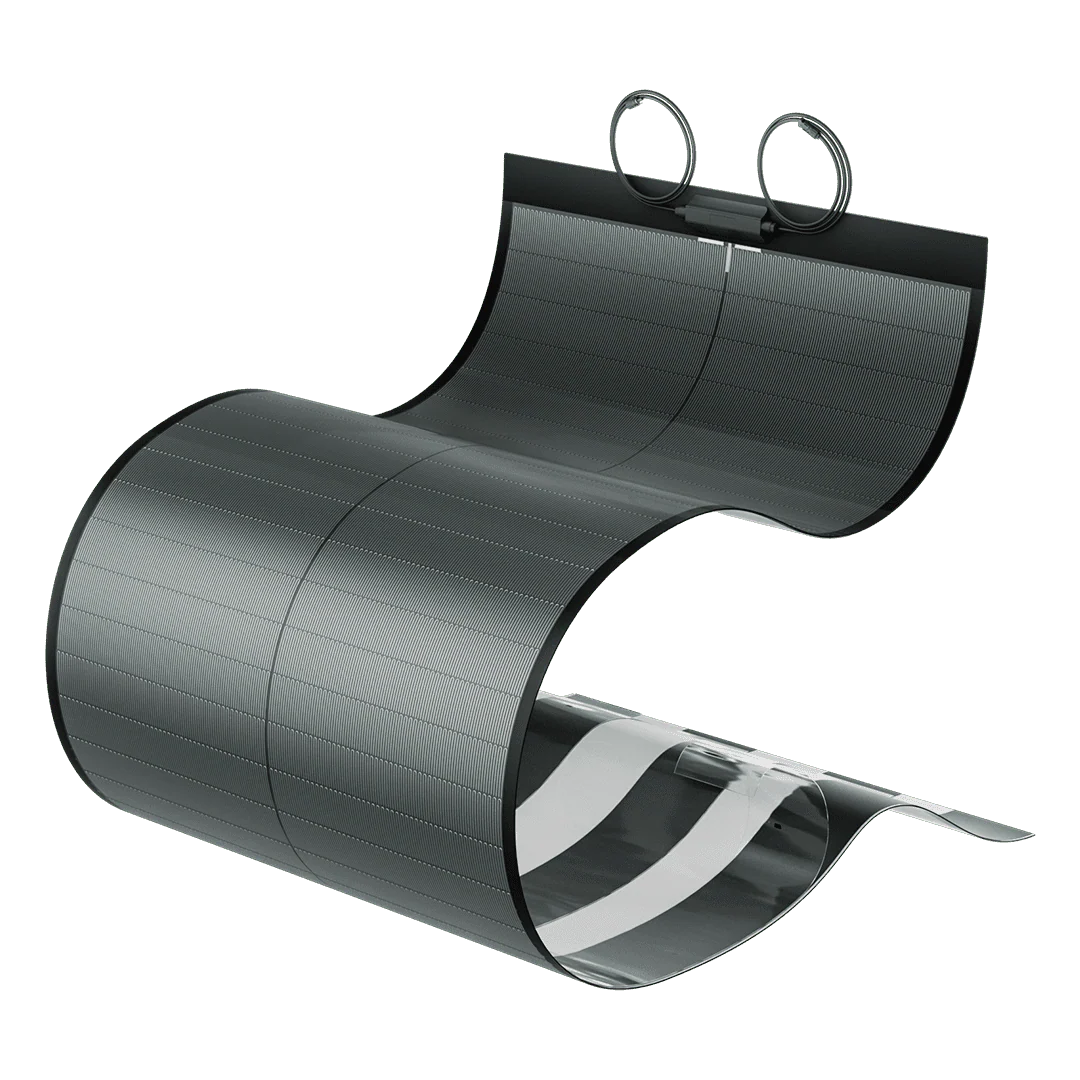
BougeRV Yuma 200W CIGS Flexible Panel
Best overall for mobile-home roofs 200W CIGS Thin-Film 8.44 lbs $587.49
At 8.44 lbs and 0.06 in thick, the Yuma 200W bonds flat to the roof and adds under 0.5 psf — no brackets, no drilled holes, no point-loads. Its ETFE-coated CIGS cells handle partial shade and –40°F to +185°F, and the adhesive backing removes the #1 cause of roof leaks. For the structural constraints of a HUD-code roof, nothing else comes closer to an ideal fit.
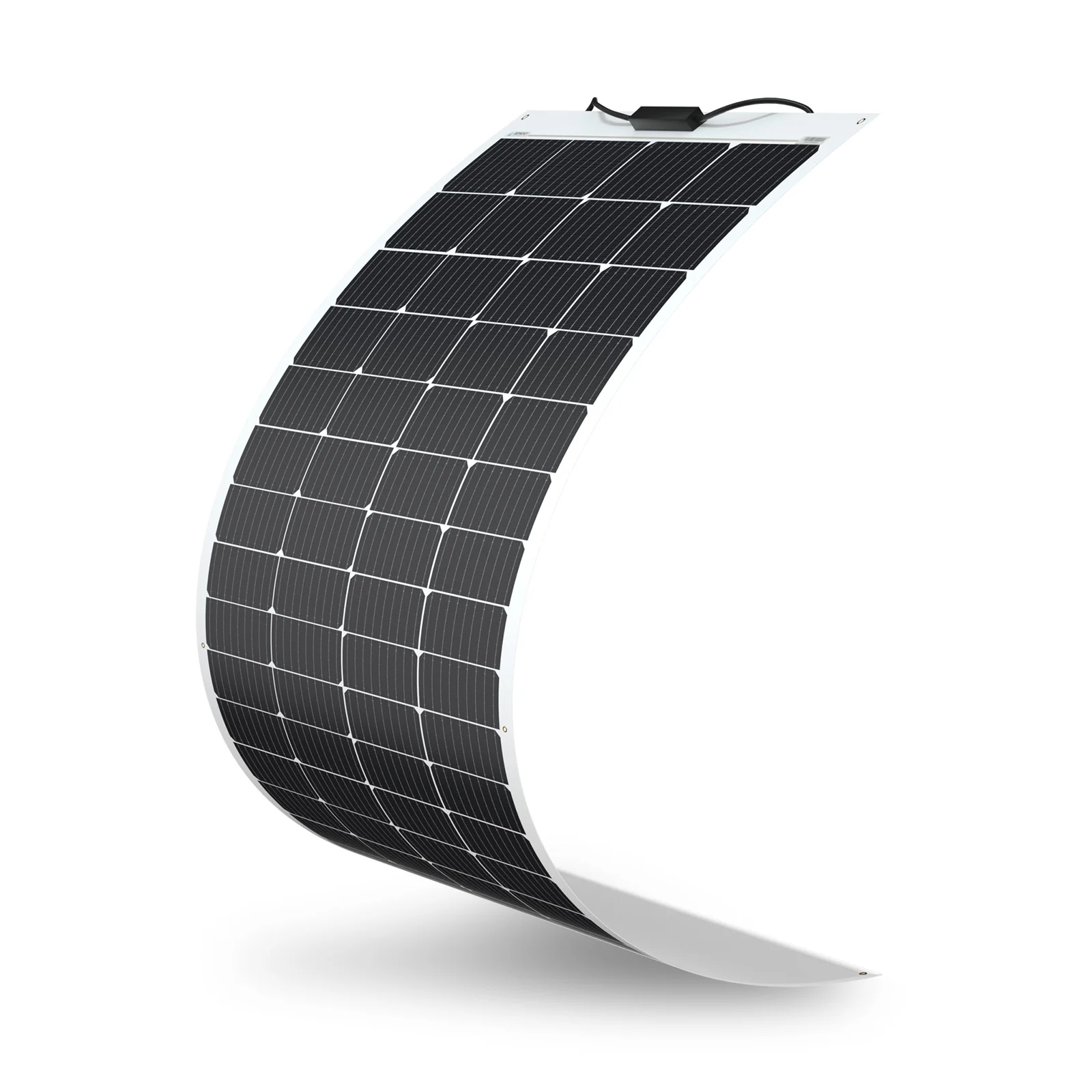
Renogy 175W Flexible Panel
Best lightweight monocrystalline panel 175W Monocrystalline (flexible) 6.2 lbs $202.93
If you want flexible without thin-film, Renogy's 175W laminate is under 0.1 in thick and just 6.2 lbs at 17.3% efficiency. It curves to a slightly contoured roof and is a proven, widely-supported choice.
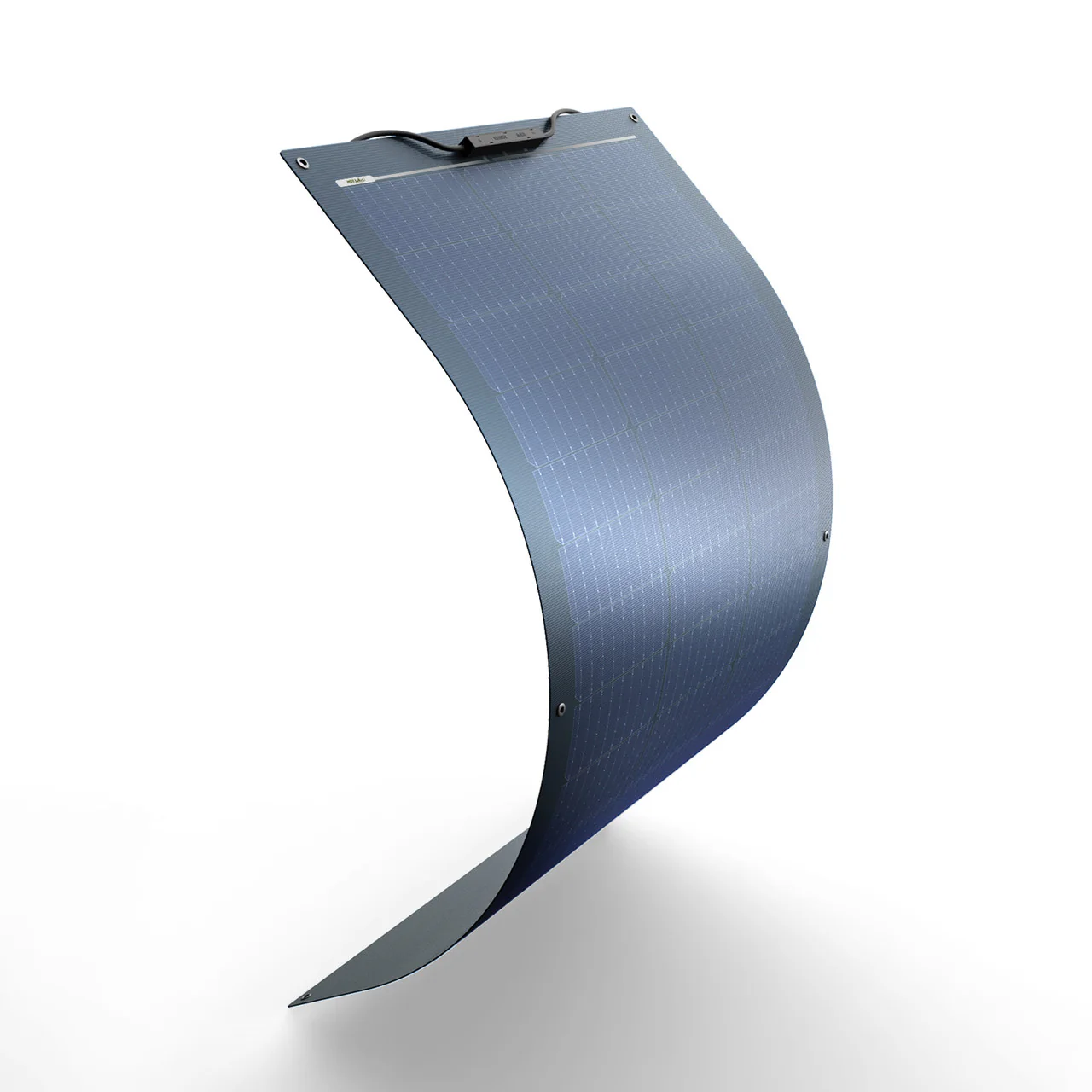
HQST 100W Flexible Panel
Best efficiency-to-weight ratio 100W Monocrystalline (flexible) 5.3 lbs $82.49
A remarkable 23% efficiency at only 5.3 lbs makes the HQST 100W the most watt-dense lightweight panel on this list — ideal when roof area and roof load are both tight.
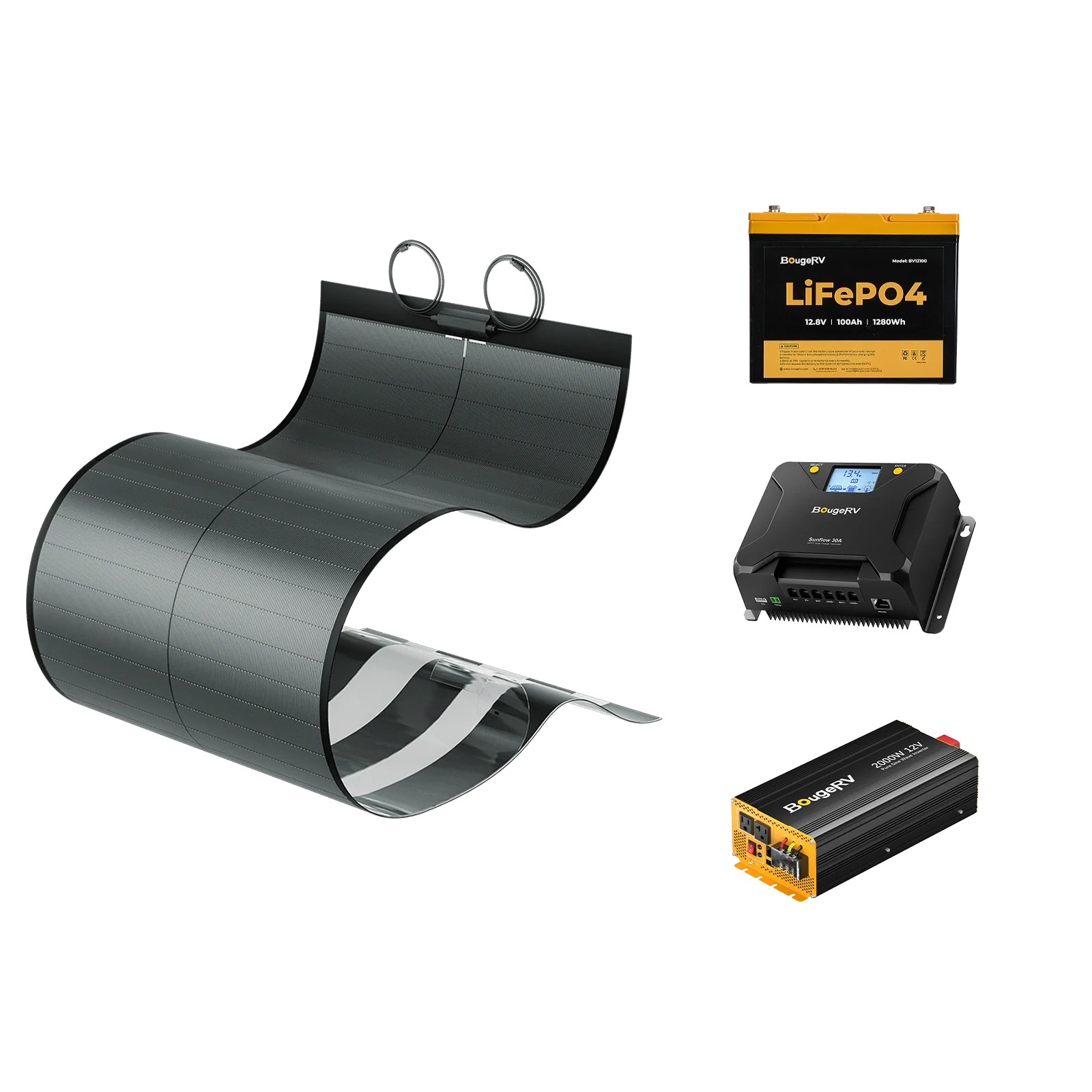
BougeRV 200W CIGS Adhesive Kit
Best complete drill-free kit 200W CIGS Thin-Film $1,162.49
Everything the Yuma panel offers, packaged with a 30A MPPT controller, a 2,000W inverter, and a 100Ah LiFePO4 battery. It's the closest thing to a turnkey, no-penetration off-grid system for a manufactured home.
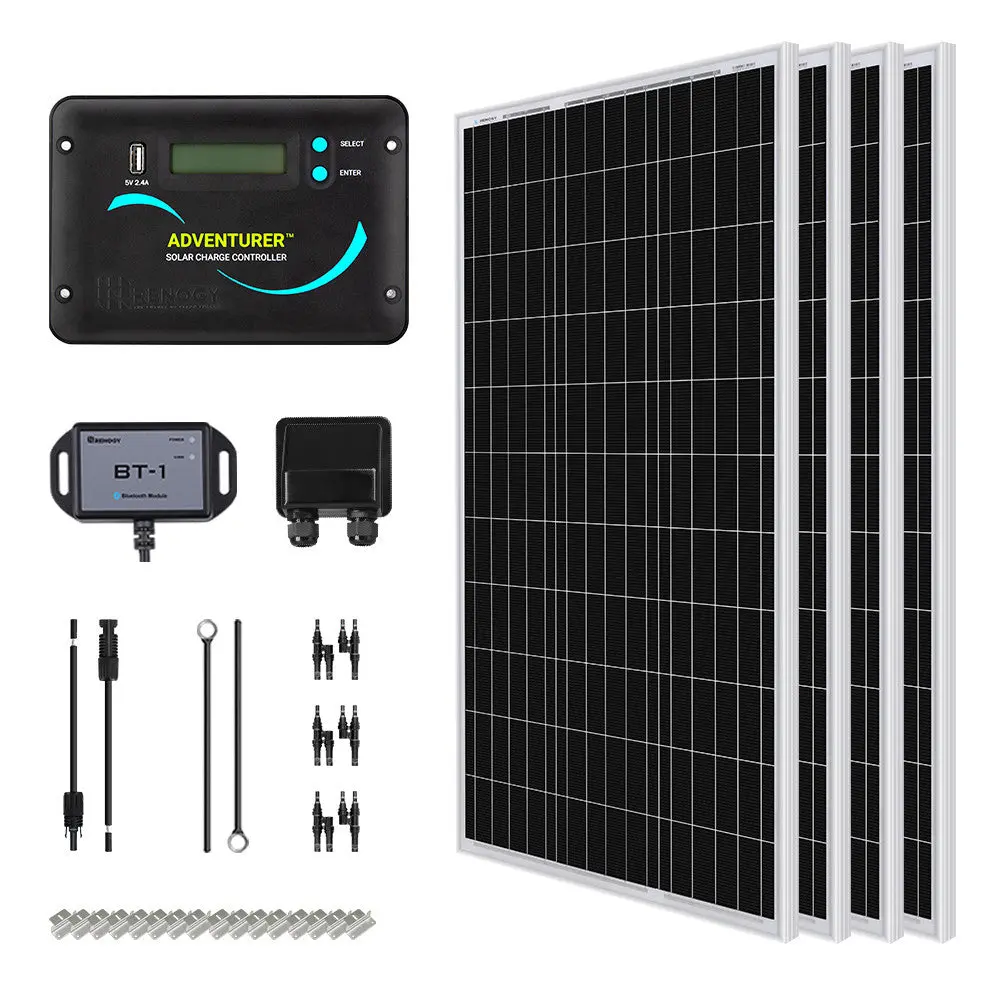
Renogy 400W Starter Kit
Best DIY expansion kit 400W Monocrystalline (4×100W) $493.74
Four 100W panels and a 40A Rover MPPT controller at a starter price. MPPT harvests 20–30% more than the PWM units bundled with cheaper kits, and the system is easy to expand as your loads grow.
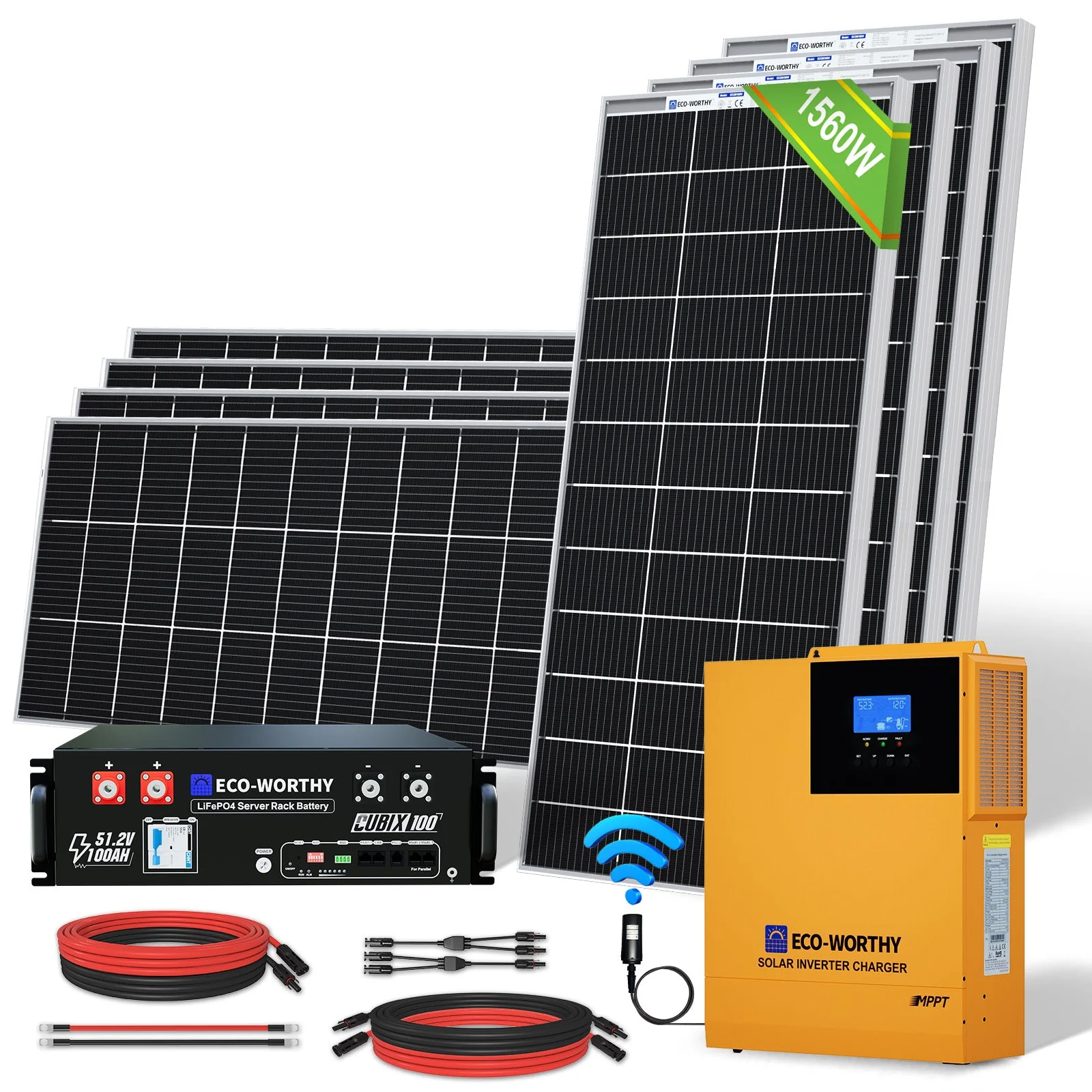
ECO-WORTHY 1200W Kit
Best whole-home off-grid kit 1200W Monocrystalline (6×195W) Coming soon
1,200W of panels, a 60A MPPT controller, and a 3,000W pure-sine inverter — enough to anchor a serious off-grid manufactured home. Best paired with a ground mount or accessory roof given the array's combined weight.
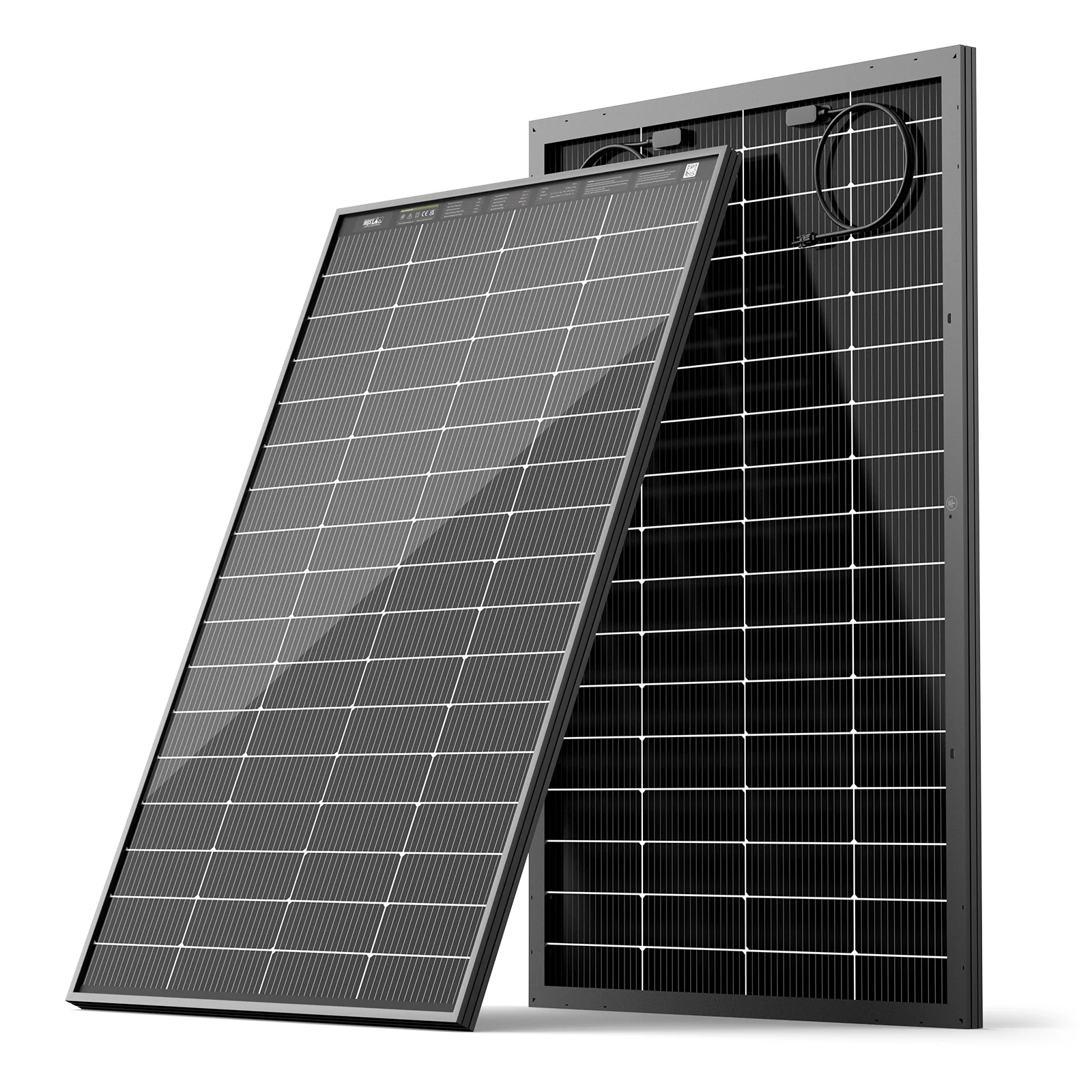
HQST Compact Bifacial 200W
Best rigid panel for ground mounts 200W N-Type Monocrystalline (bifacial) 18.0 lbs $162.49
When you've moved the array off the roof, efficiency wins. At 25.4% with up to 30% bifacial rear gain, the HQST Compact Bifacial squeezes the most production from a ground rack or carport.
Canadian Solar 435W
Best high-wattage panel for community arrays 435W TOPCon N-Type 50.0 lbs Coming soon
For pooled, community microgrid builds or large ground mounts, a 435W TOPCon module cuts the number of panels, rails, and connectors you need. Too heavy for a manufactured roof — strictly ground-mount.
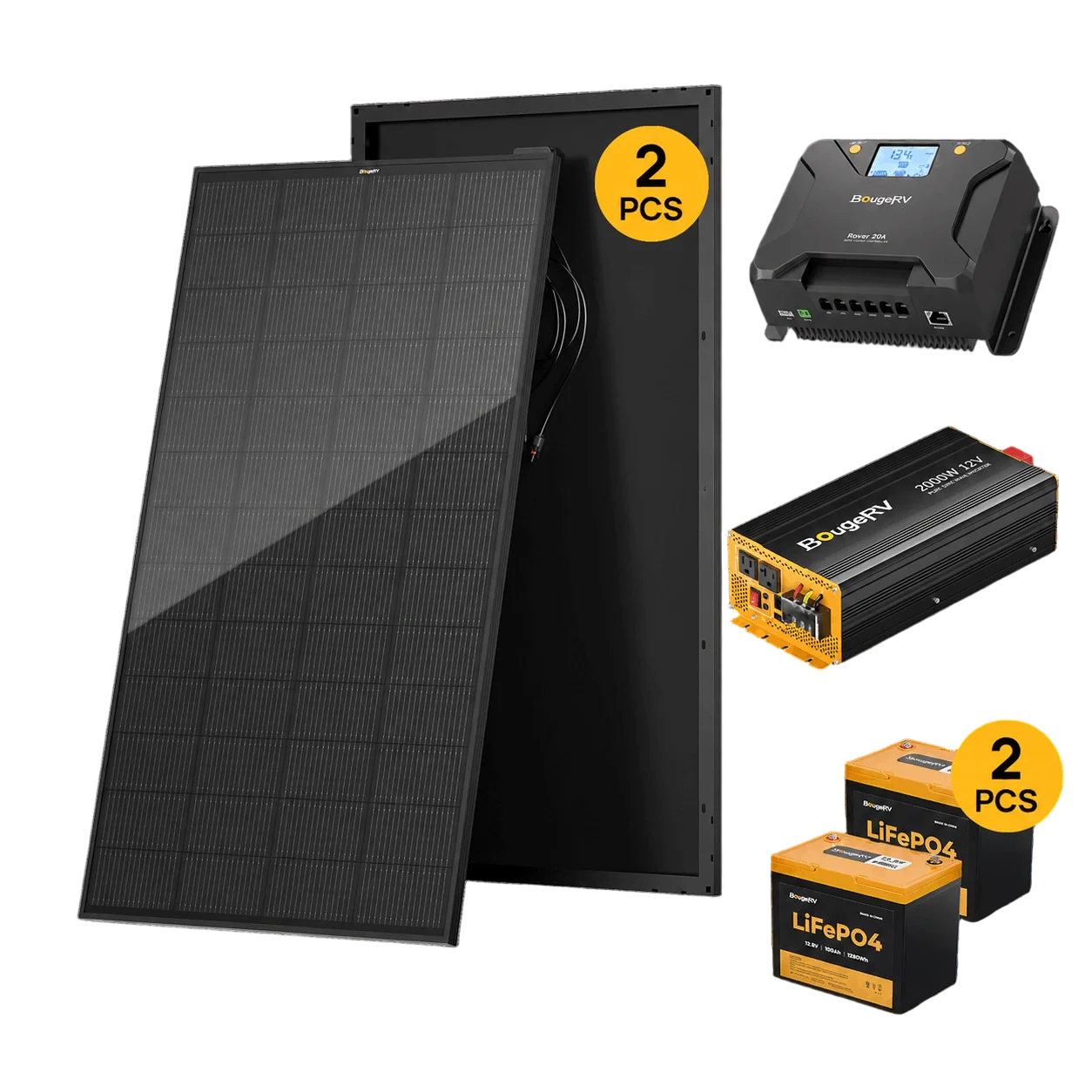
BougeRV 400W ShadePower
Best for partial shade 400W N-Type TOPCon $1,499.99
ShadePower bypass diodes keep output up when a vent, antenna, or neighboring unit throws shade across part of the array — a common reality in tight mobile-home parks.
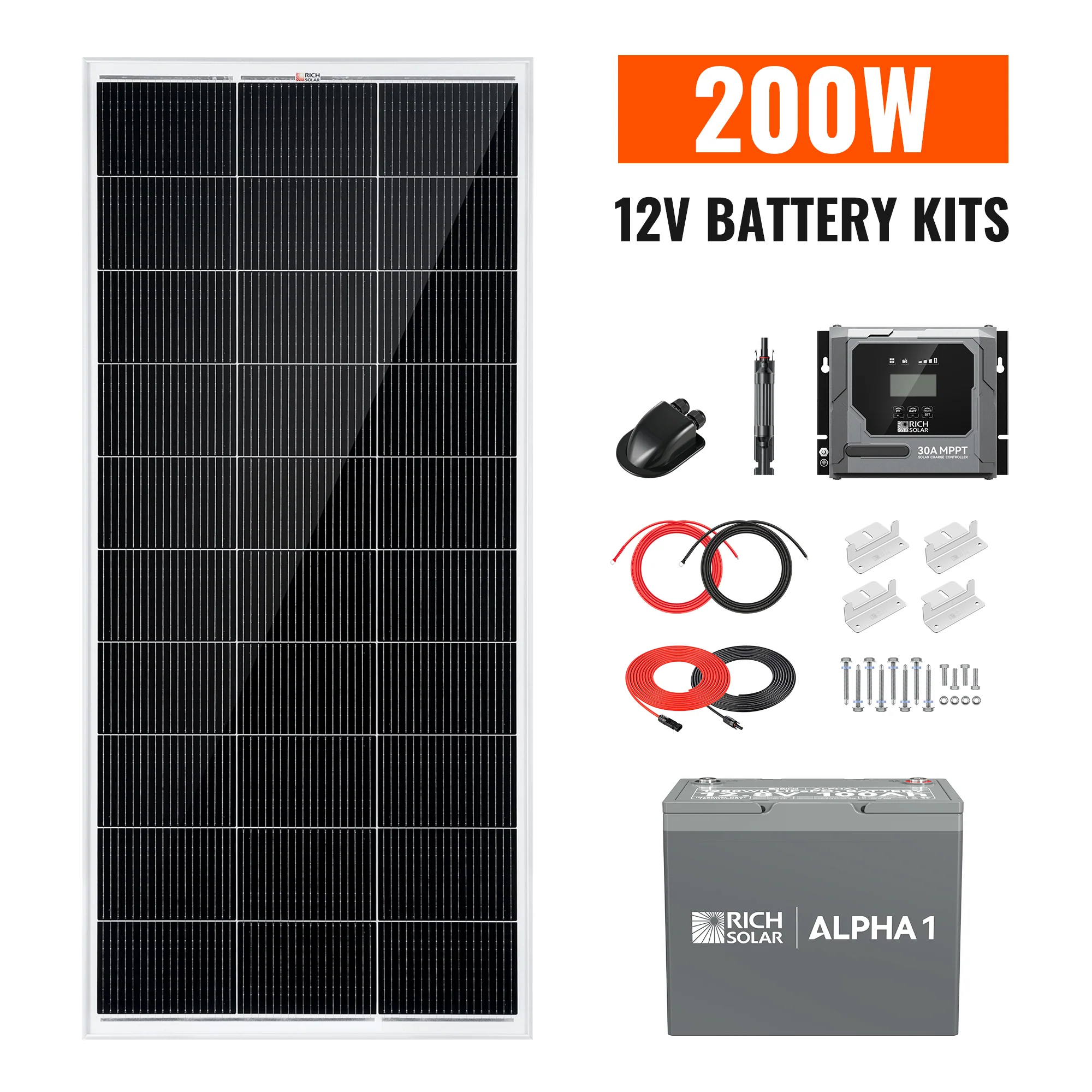
Rich Solar 200W Kit
Best budget kit 200W Monocrystalline (2×100W) $649.99
A 200W dual-panel kit with a 20A MPPT controller for $269 — the cheapest way to get a genuinely efficient (not PWM) charge controller in a starter package.
Comparison table
| # | Panel / award | Type | Watts | Weight | Efficiency | Price |
|---|---|---|---|---|---|---|
| #1 | BougeRV Yuma 200W CIGS Flexible Panel Best overall for mobile-home roofs | Flexible | 200W | 8.44 lbs | 17.0% | $587.49 |
| #2 | Renogy 175W Flexible Panel Best lightweight monocrystalline panel | Flexible | 175W | 6.2 lbs | 17.3% | $202.93 |
| #3 | HQST 100W Flexible Panel Best efficiency-to-weight ratio | Flexible | 100W | 5.3 lbs | 23.0% | $82.49 |
| #4 | BougeRV 200W CIGS Adhesive Kit Best complete drill-free kit | DIY | 200W | — | — | $1,162.49 |
| #5 | Renogy 400W Starter Kit Best DIY expansion kit | DIY | 400W | — | — | $493.74 |
| #6 | ECO-WORTHY 1200W Kit Best whole-home off-grid kit | DIY | 1200W | — | — | Coming soon |
| #7 | HQST Compact Bifacial 200W Best rigid panel for ground mounts | Rigid | 200W | 18.0 lbs | 25.4% | $162.49 |
| #8 | Canadian Solar 435W Best high-wattage panel for community arrays | Rigid | 435W | 50.0 lbs | — | Coming soon |
| #9 | BougeRV 400W ShadePower Best for partial shade | DIY | 400W | — | — | $1,499.99 |
| #10 | Rich Solar 200W Kit Best budget kit | DIY | 200W | — | — | $649.99 |
Why mobile homes are different
A manufactured home is a factory-built structure on a permanent chassis, designed to be transportable. Homes built after June 15, 1976 must meet the federal HUD Code (24 CFR Part 3280); older homes have no standardized structural engineering and usually need reinforcement before any solar.
Crucially, a site-built roof handles 20–40 psf of live load, but a manufactured roof is often limited to a dead-load capacity of just 10–15 psf. A rigid 60-cell panel weighs 40–50 lbs and, with racking and flashing, adds 3.3–4 psf — before snow (10–40 psf in the north) and wind uplift (120–180 mph design speeds).
HUD roof-load zones
| Zone | Region | Design load | Impact on rooftop solar |
|---|---|---|---|
| South | FL, the Southwest | 20 psf | Temporary maintenance traffic only — no permanent dead-load allowance. |
| Middle | Mid-Atlantic, Midwest | 20–40 psf | Moderate snow loads; requires precise weight distribution. |
| North | Northern & mountain (AK, ME) | 40–70+ psf | High reinforcement; standard rigid racking possible if angles are optimized. |
The point-load problem
To limit leaks, installers use as few brackets as possible — but that concentrates the array's weight onto a handful of points on thin rafters or trusses. Under wind uplift those point-loads can crack framing or detach panels. Spreading weight evenly is exactly why adhesive thin-film wins on these roofs:
Traditional rigid mounting (concentrated point-loads):
        ||      ||      <-- weight concentrated on a few brackets
   ==================   <-- roof deck: deflection, pooling, cracking risk

Adhesive CIGS (evenly distributed load):
   =========================  (0.06 in thick)
   =========================  roof deck: <0.5 psf spread evenly
Rule of thumb
If it's going on the home's roof, go lightweight and low-profile (CIGS or flexible, under ~1 psf). If you need rigid, high-wattage panels, put them on a ground mount, carport, or accessory structure instead. Roofs older than 15 years should be repaired or replaced before any install.
How many solar panels does a manufactured home need?
Size to your actual utility bills, but these averages set realistic targets (and show why high-efficiency panels matter when roof area is limited). It's also worth knowing why the payback is strong here: mobile homes are the most energy-intensive housing type in the U.S. per square foot.
| Home size | Annual use | Daily demand | ~100W panels | Roof area |
|---|---|---|---|---|
| 600 sq ft | 5,460 kWh | 14.95 kWh | 41 panels | 721.6 sq ft |
| 800 sq ft | 7,280 kWh | 19.94 kWh | 55 panels | 968.0 sq ft |
| 1,000 sq ft | 9,100 kWh | 24.93 kWh | 68 panels | 1,196.8 sq ft |
| 1,200 sq ft | 10,920 kWh | 29.91 kWh | 82 panels | 1,442.4 sq ft |
Charge controllers & batteries
MPPT vs PWM: PWM controllers run at 75–80% efficiency and suit small systems under 200W ($30–$60). MPPT controllers hit 95–98% and harvest 20–30% more energy — recommended for anything over 400W.
Battery sizing: A 200W system typically needs 150–400 Ah at 12V. AGM batteries shouldn't go below 50% depth of discharge (so 300–400 Ah), while LiFePO4 safely runs 80–90% DoD and lasts 8–12 years — 150–200 Ah is enough, and the lighter weight is gentler on the home's subfloor.
Permitting & code compliance
Rooftop solar on a manufactured home must meet federal, state, and local rules. In California, the HCD regulates alterations under Title 25; you file an HCD 415 permit with structural plans stamped by a licensed engineer detailing the fastening schedule and how the framing carries the added load. Utility-interactive rooftop systems up to 8 kW can use an over-the-counter process; larger or ground-mounted systems need a full HCD plan review.
In a park where management owns the grid, you'll also need a Point-of-Interconnection approval letter from the utility and an HCD 50 from park management. Keep a 3-ft clear access pathway from eave to ridge for firefighters, and label energized disconnects. Solar-rights laws like California's SB 1190 protect individually-metered residents from park bans.
One more 2026 reality to budget for: the federal residential solar tax credit changed dramatically this year. If you buy a system outright, the 30% credit is gone — only leased/PPA arrangements still capture it.
Ground mounts & community arrays
If the roof can't take it, a ground-mounted array sidesteps the weight limits entirely, can be tilted to the optimal angle, and doesn't void the roof warranty. Manufactured-home communities can also pool buying power for a shared ground-mount microgrid using bulk rigid panels like the Canadian Solar 435W.
Frequently asked questions
How much weight can a mobile home roof hold?
Most manufactured and mobile-home roofs are engineered for only 10–15 psf of permanent (dead) load — far less than the 20–40 psf of a site-built house. A rigid solar array adds about 3.3–4 psf installed, which can exceed that budget once snow and wind uplift are added. This is why lightweight flexible and CIGS panels (under 0.5 psf) are usually the safest rooftop choice.
Are flexible solar panels better for mobile homes?
For rooftop installation, usually yes. Flexible CIGS panels weigh as little as 8 lbs, are about 0.06 in thick, and bond directly to the roof — eliminating point-loads and the drilled holes that cause leaks. Rigid panels deliver more watts per dollar but are better mounted on a ground rack, carport, or accessory structure.
How many solar panels do I need for a manufactured home?
It depends on floor area and usage. As a rough guide, a 600 sq ft home uses about 5,460 kWh/year (~15 kWh/day, ~41×100W panels), an 800 sq ft home about 7,280 kWh/year (~55 panels), and a 1,000 sq ft home about 9,100 kWh/year (~68 panels). High-efficiency panels reduce the roof area required. Always size to your actual utility bills.
Do I need a permit to put solar on a mobile home?
Almost always. In California, for example, you file an HCD 415 permit with structural plans stamped by a licensed engineer; utility-interactive rooftop systems up to 8 kW can use an over-the-counter process, while larger or ground-mounted systems need a full plan review. Installing in a park adds utility interconnection and park-approval steps. Check your state and local code.
MPPT or PWM charge controller — which should I buy?
MPPT controllers run at 95–98% efficiency and harvest 20–30% more energy than PWM units (75–80%). PWM is fine for small systems under ~200W on a budget, but for anything over 400W an MPPT controller pays for itself.
Can I put solar panels on a pre-1976 mobile home?
Pre-June-15-1976 homes predate the federal HUD Code and have no standardized structural engineering. Their roof framing must be individually evaluated and often reinforced before any solar is mounted — a ground mount is frequently the safer and simpler route.
Keep reading
- Solar data & charts for mobile homes — the primary-source roof-load, wind-zone, and panel-output data behind these picks.
- Do solar panels need direct sunlight? — how cloud cover, heat, and shade affect real output on a mobile-home roof.