
Guide
Solar Panels for Mobile Homes: 2026 Cost, Weight & Best Panel Types
Why Solar Panels Behave Differently on a Mobile Home
A standard residential solar panel weighs somewhere around 40 kg (roughly 18-20 kg for the glass laminate itself, more once you add rails, clamps, and mounting hardware). On a stick-built house with full-dimension rafters, that load is a non-issue. On a mobile or manufactured home, it can be the difference between a straightforward install and a rejected permit.
Manufactured homes are built to HUD's federal construction code rather than local residential building codes, and that code assigns every home a wind zone (I, II, or III) based on where it sits. The higher the wind zone, the stronger your roof structure needs to be — and the more scrutiny your solar mounts will get. Several states, including Washington, go as far as requiring a structural engineer's sealed plans before a solar array goes on a manufactured home roof, specifically to confirm the roof joists can carry the added dead load and that the racking can survive the local wind rating.
That's why "solar panels" means something slightly different once you're shopping for a mobile home. You've generally got three paths:
- Roof-mount with standard rigid panels — only viable if an engineer confirms your roof can take the extra 3-4 lb/sq ft, and usually limited to lighter arrays.
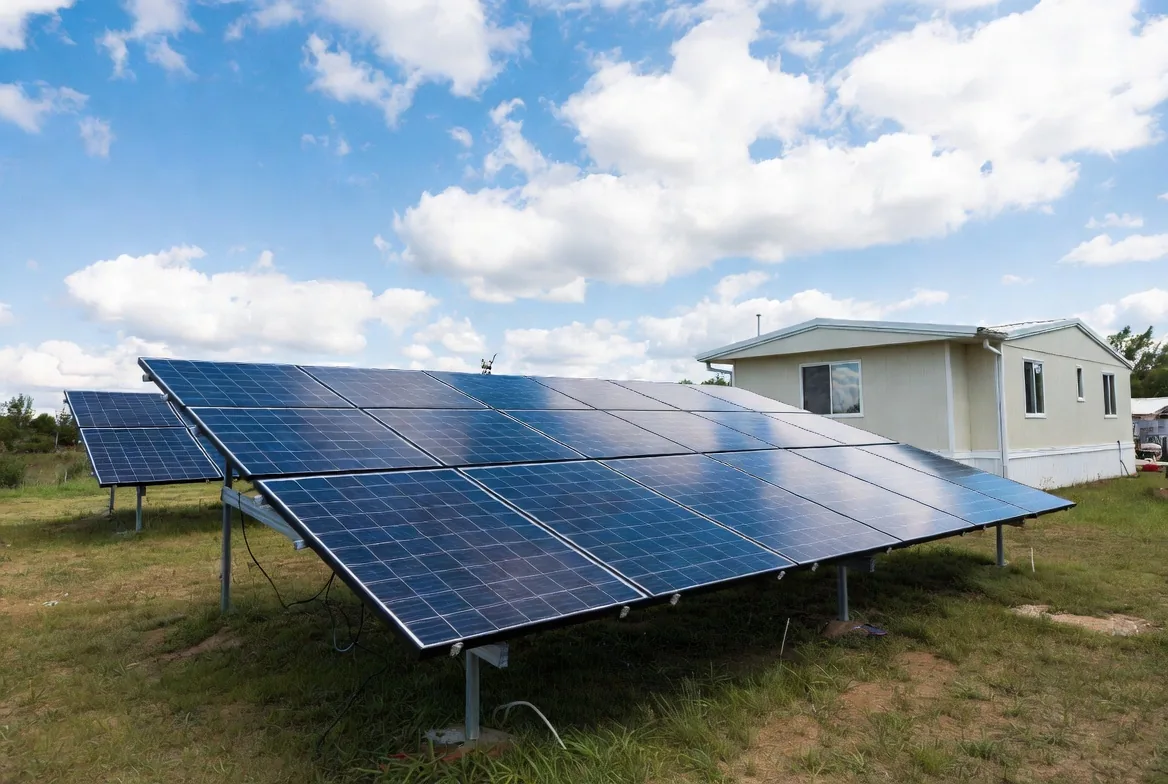
- Ground-mount or pole-mount — sidesteps the roof-loading question entirely by putting the array on its own frame in the yard.
- Lightweight flexible or thin-film panels — semi-flexible monocrystalline or CIGS panels that weigh as little as 2-4 kg and mount with adhesive or minimal brackets instead of a full rail system.
HOAs and Mobile Home Parks Can't Always Say No
If you live in a manufactured home community with a homeowners' association, there's good news: roughly 30 U.S. states now have "solar access" laws that prevent HOAs from banning solar panels outright. What they can still do in most states is regulate placement and appearance — requiring flush mounts, limiting panels to certain roof faces, or setting color/frame requirements. Before you buy equipment, it's worth pulling your park's covenants and checking your state's specific solar-access statute, since the details (and loopholes) vary a lot by state. EnergySage has a state-by-state breakdown of HOA solar rules that's a good starting point.
What Solar Panels Cost in 2026
Solar pricing has come down a long way — installed residential solar costs roughly 50% less than it did in 2010 — and 2026 is shaping up to be one of the cheaper years of the decade, though tariff-driven pricing has ticked up slightly since 2025. As of this year, expect to pay somewhere between $2.50 and $3.50 per watt before incentives, with EnergySage pricing data putting the national average closer to $2.60/watt.
In dollar terms, that works out to roughly:
- 1 kW (a small supplemental array): $2,500 – $3,000
- 4 kW (a modest single-wide setup, 8-12 panels): ~$12,000
- 7.5 kW (a mid-size system): ~$22,500
- 10-12 kW (whole-home for a larger double-wide): $25,000 – $30,000
Those figures are all pre-incentive. Solar.com's cost breakdown is a useful reference if you want to model out a specific system size before you start requesting quotes.
Monocrystalline vs. Polycrystalline vs. Thin-Film
Panel type matters more for mobile homes than for a conventional house, because weight and flexibility are real constraints, not just cost trade-offs.
Monocrystalline is the default choice for almost every new residential install today, mobile home or not. Efficiency generally runs 20-23%, and well-known brands in this space include Qcells, Silfab, JA Solar, REC, Panasonic, JinkoSolar, and Canadian Solar. High-output modules from Aiko and LONGi now reach roughly 475-645 watts per panel at around 23.8% efficiency, while JinkoSolar and FuturaSun models land in the 475-590 W range at 22.8-23.8% efficiency. REC's Alpha R-X line delivers around 470 W at 22.6% efficiency.
Polycrystalline panels, once the budget option, have mostly fallen out of production for residential use — efficiency tops out around 16-18%, meaningfully lower than monocrystalline for the same roof space, which matters even more when your roof space (and load capacity) is limited.
Thin-film and flexible panels (CIGS or CdTe cells) are the niche that matters most for manufactured and mobile homes with weight-limited roofs. Efficiency is lower, typically 10-15%, but a flexible 80-100 W panel can weigh only 2-4 kg and mount without penetrating the roof deck or adding significant dead load — brands like Rich Solar, Renogy, and Sunflare all sell panels built for exactly this use case. EnergySage's panel-type comparison goes deeper into the trade-offs between the three.
Typical Wattage: What to Expect Per Panel
Standard 60- to 72-cell residential panels typically output 300-450 W each. Premium half-cut or N-type modules from top manufacturers now reach 500-600+ W, though those larger panels are also physically bigger and heavier — often not the right call for a weight-constrained roof. Flexible panels marketed for mobile and portable use generally run 80-120 W per panel, trading wattage for a fraction of the weight.
Bottom Line for Mobile Home Buyers
If your manufactured home's roof can pass a structural review, standard monocrystalline panels in the 350-450 W range offer the best cost-per-watt and the best use of limited roof space. If your roof can't take the load — or you'd rather not deal with an engineer's sign-off — a ground-mounted array or a set of lightweight flexible panels will get you most of the way there with far less red tape. Either way, get your park's HOA rules and your state's solar-access law in hand before you order equipment, since those two documents will shape what "solar panels" can actually look like on your particular home.