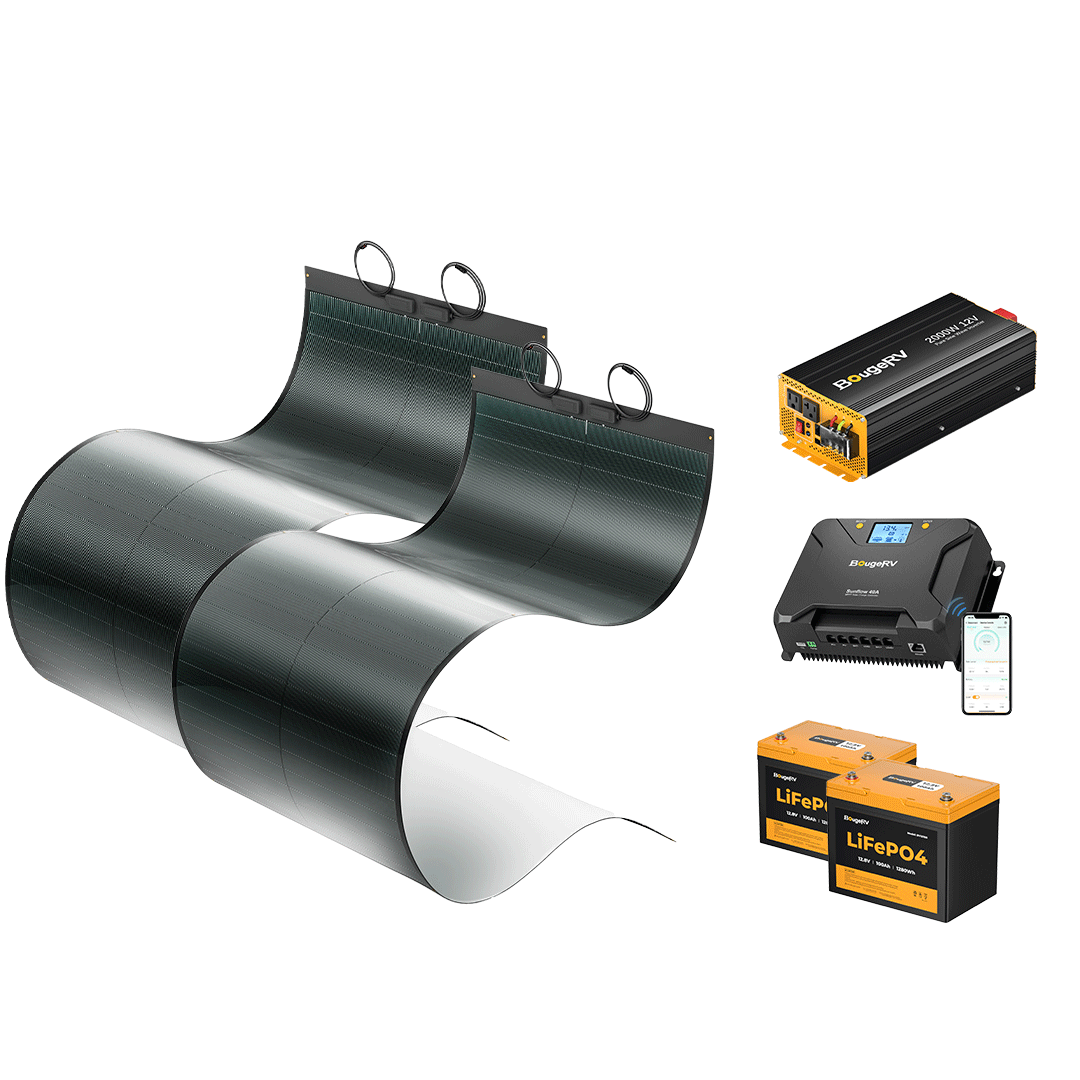
The BougeRV 400W CIGS (Holes) is a 400-watt cigs thin-film option best suited to screw-secured flexible thin-film array. Pre-punched 400W CIGS array.
At a glance
- Best for
- Screw-secured flexible thin-film array
- Power
- 400W CIGS Thin-Film
- What's in the box
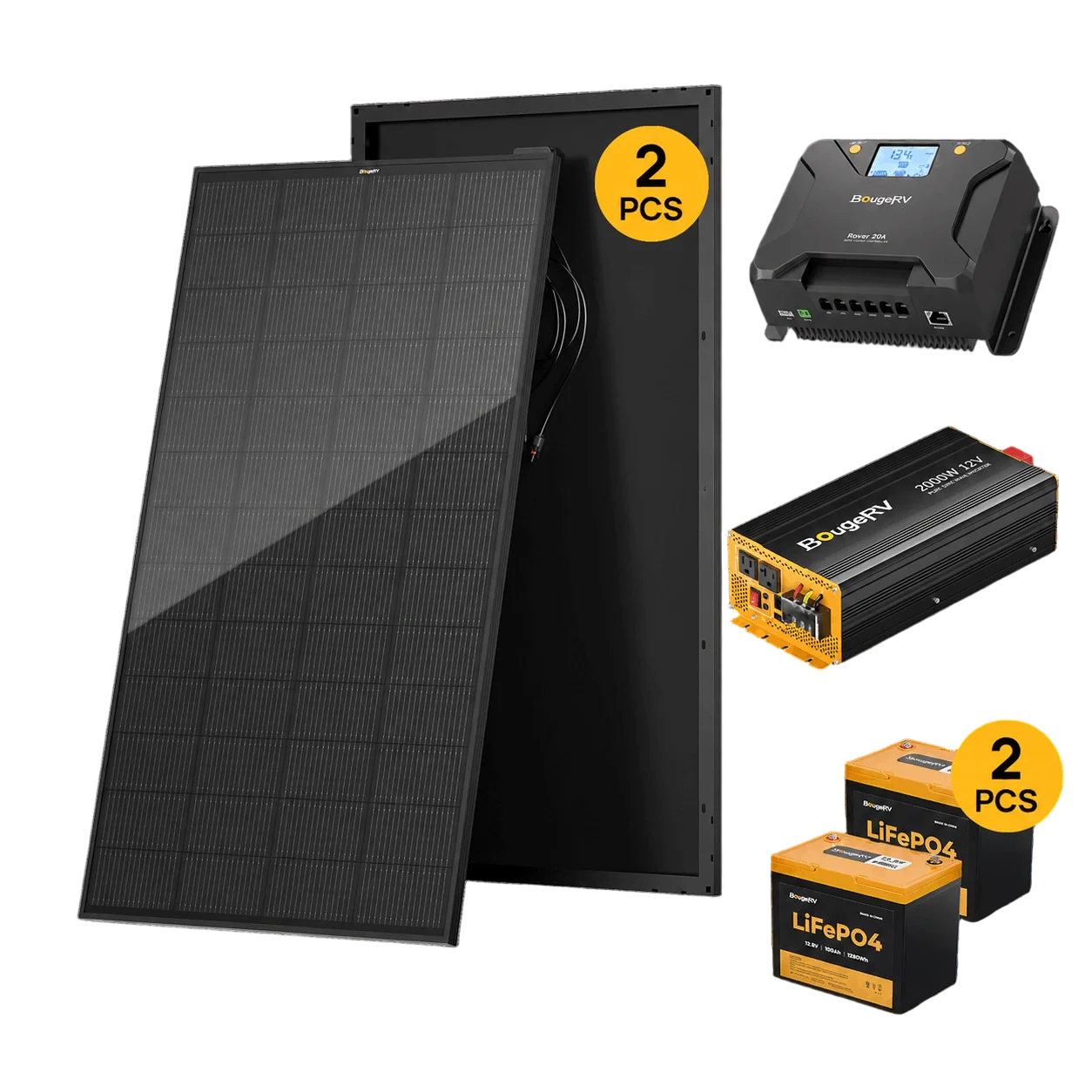
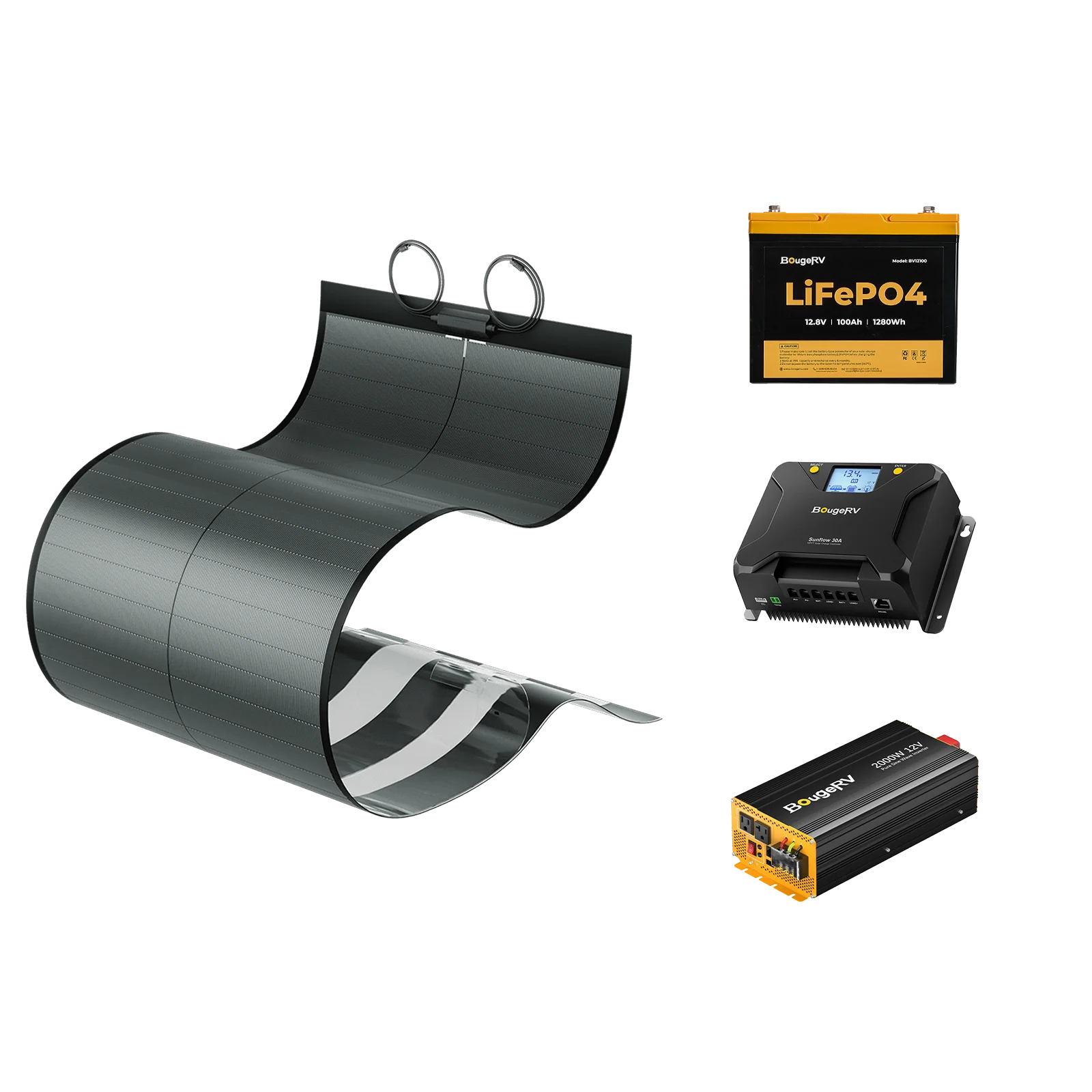
- 2 × Yuma 200W CIGS thin-film flexible panels (pre-punched holes); 1 × 40A MPPT solar charge controller; 2 × 12V 100Ah LiFePO4 batteries; 1 × 2,000W 12V pure sine wave inverter
- Roof fit
- Flexible / low-profile — suits manufactured-home roofs
- Price
- $1,962.49 — flat $25 US shipping, 30-day returns
Overview
Mechanically identical to the adhesive 400W CIGS kit, this version ships the two Yuma 200W thin-film panels with pre-punched grommet holes for screw or zip-tie mounting — the right choice when you'd rather fasten panels than adhere them, or plan to remove them seasonally.
It includes the same 40A MPPT controller, two 12V 100Ah LiFePO4 batteries, and 2,000W pure sine wave inverter, delivering a complete off-grid system with the shade and heat tolerance CIGS is known for.
Features & real-world use
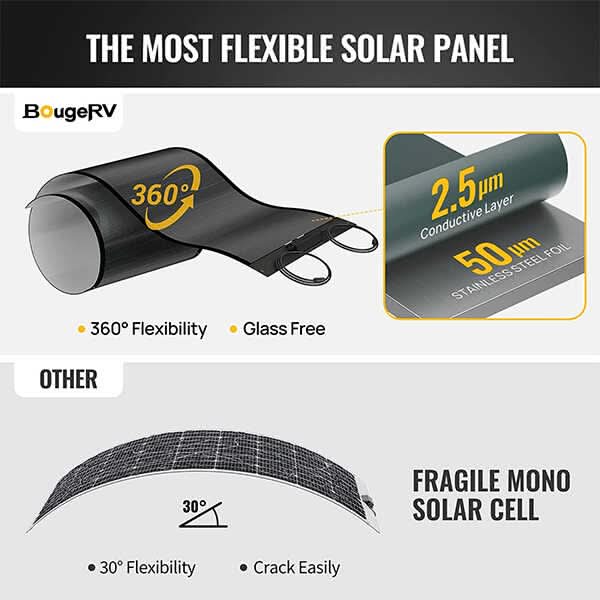
The most flexible panel you can bolt down
The CIGS sheet bends a full 360° and is glass-free, so it follows curves that spider-crack a rigid 'flexible' mono panel at 30° — here with pre-punched holes to screw or zip-tie it down.
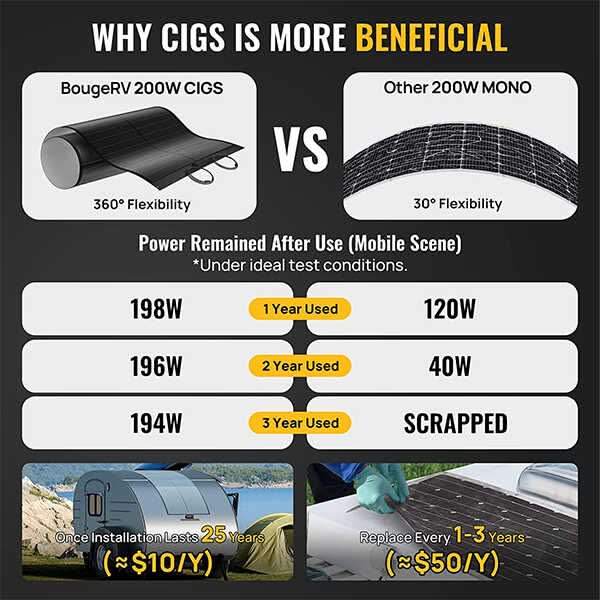
Built to outlast a mono array
CIGS holds nearly all its rated output after years of mobile use — roughly 198W of the original 200W after a year — where a comparable mono panel degrades hard or gets scrapped in 1–3 years, closer to $10 a year than $50.
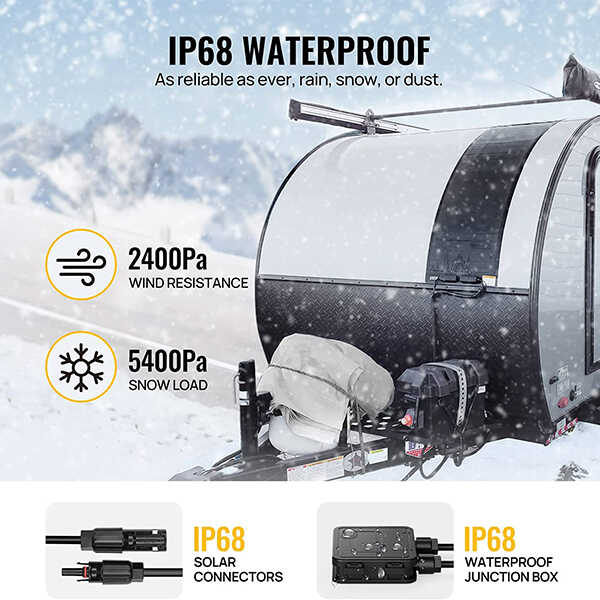
IP68 waterproof, rain or snow
Panels, connectors, and junction boxes are all sealed to IP68 and rated to 2400Pa wind and 5400Pa snow load, so weather on the roof doesn't faze the array.
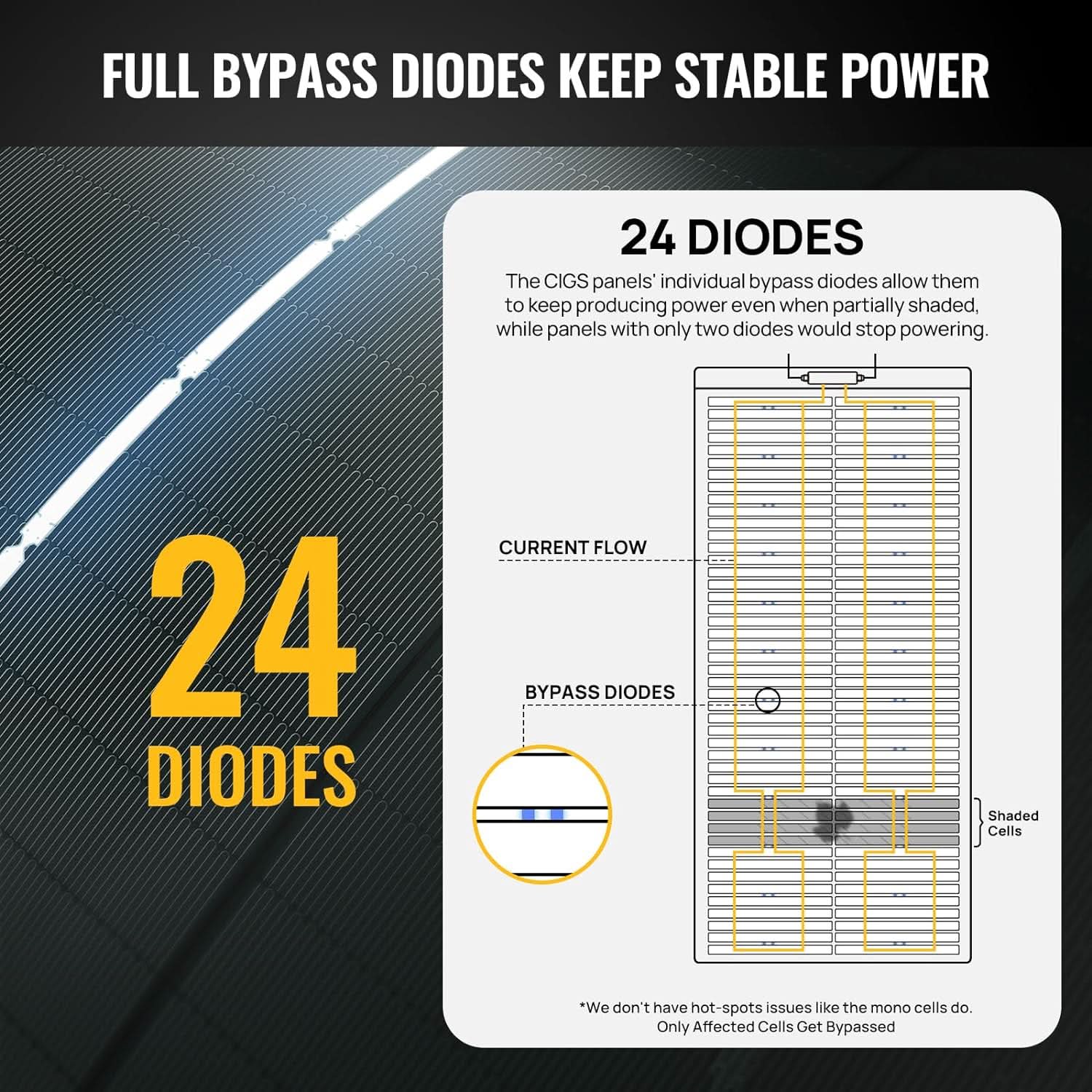
Bypass diodes keep the power steady
The CIGS panels' 24 bypass diodes let them keep producing when part of the array falls into shade, where cheaper panels with only two diodes stop delivering.
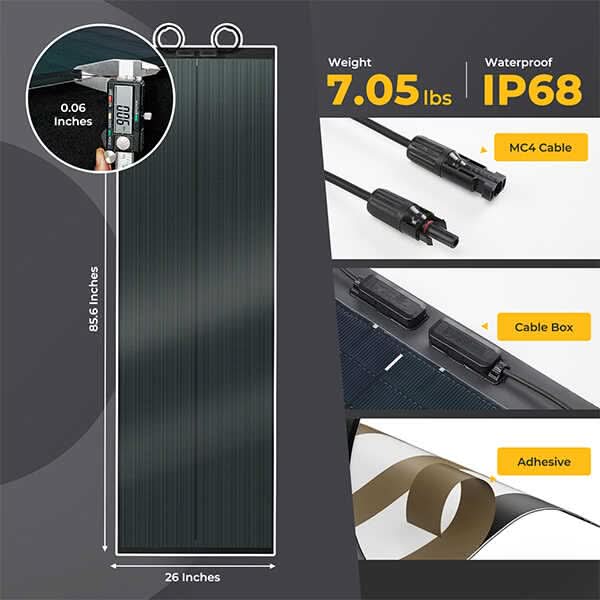
Light enough to handle solo
Each panel weighs about 7 lbs and ships with MC4 leads and a sealed cable box, so one person can place and wire the array through its pre-punched mounting holes.
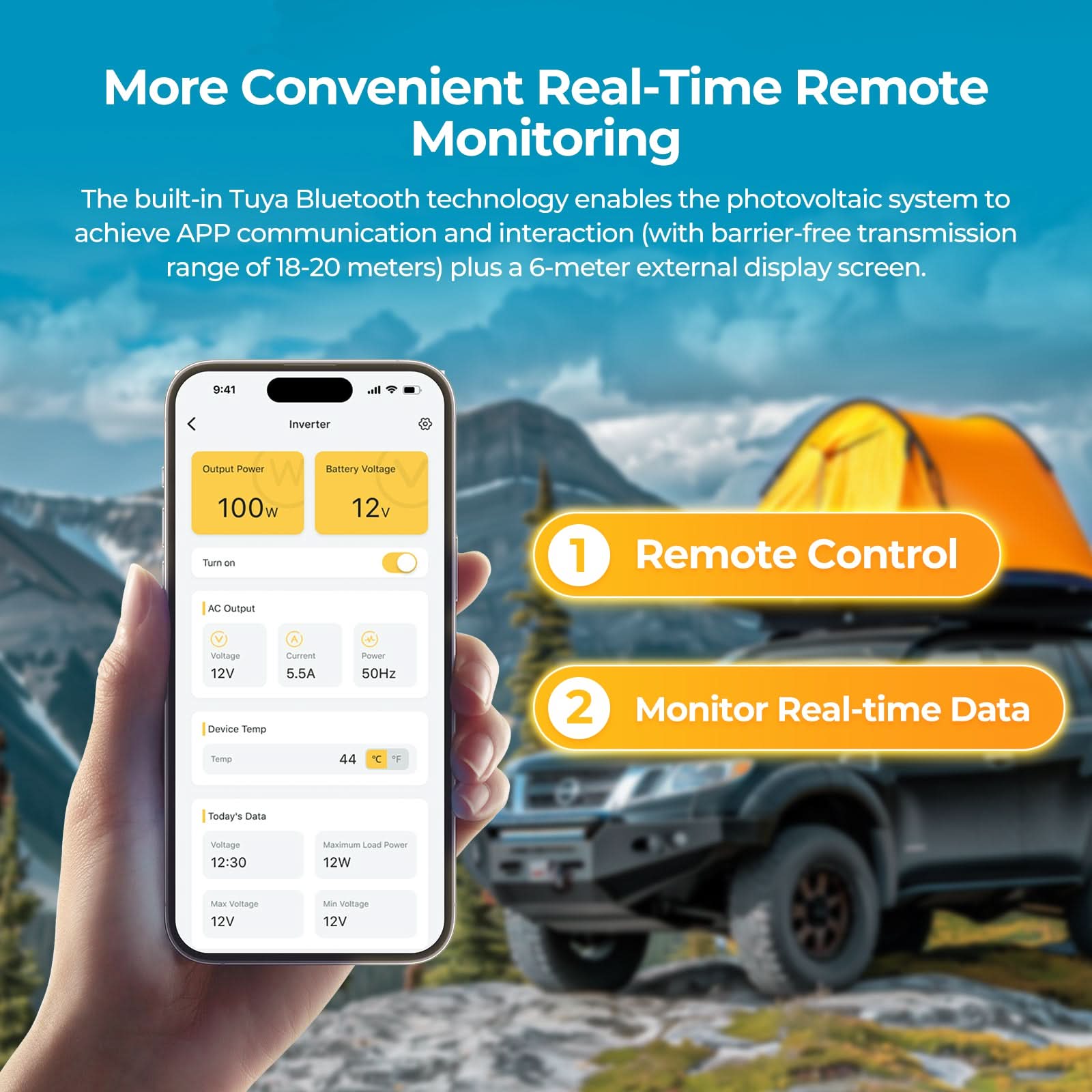
Monitor and control from your phone
The inverter's Bluetooth link shows real-time output, battery voltage, and load in BougeRV's app from up to ~18–20 meters, with remote on/off control.
Built for any roof, deck, or vehicle
These CIGS panels fasten through pre-punched holes and flex to 360°, so the array goes onto almost any roof or deck a rigid module can't — while the controller, two batteries, and inverter make it a complete off-grid system.
RV & trailer roofs
The thin CIGS panels screw or zip-tie down and follow the roof's crown — low-profile, and removable seasonally if you want.
Camper vans & conversions
Lightweight panels for a high-top or pop-top roof, with the power system mounted inside.
Boats & marine decks
IP68 sealing and 2400Pa/5400Pa ratings let the array live on a wet, exposed deck.
Airstreams & curved rigs
360° flex wraps the tight radius of a polished trailer where rigid panels can't sit.
Mobile & manufactured homes
Thin-film panels stay within a HUD-code roof's dead-load budget while the two LiFePO4 batteries run real household loads.
Cabins, sheds & tiny homes
A complete off-grid system for an outbuilding, with 2,000W of AC on tap.
What's in the box
- 2 × Yuma 200W CIGS thin-film flexible panels (pre-punched holes)
- 1 × 40A MPPT solar charge controller
- 2 × 12V 100Ah LiFePO4 batteries
- 1 × 2,000W 12V pure sine wave inverter
Specifications
| Brand | BougeRV |
|---|---|
| Category | DIY Solar Kits |
| Power output | 400 W |
| Cell technology | CIGS Thin-Film |
| Price | $1,689.99 |
| Best for | Screw-secured flexible thin-film array |
| Charge Controller | MPPT |
| Inverter | Not included |
Roof-load fit for manufactured homes
CIGS thin-film adds under 0.5 psf and bonds flat to the deck — no point loads, safe across all HUD roof-load zones (South, Middle, North).
Charge-controller type decides how much of your panels' output actually reaches the battery:
Pros & cons
👍 Pros
- Flexible CIGS thin-film — drill-free, zero point-load on the roof
- Includes an efficient MPPT charge controller (95–98% vs ~75% PWM)
👎 Cons
- Lower peak efficiency than premium rigid mono — needs more area per watt
Is the BougeRV 400W CIGS (Holes) right for your mobile home?
Choose this panel if your priority is screw-secured flexible thin-film array. Because it is a flexible, low-profile panel, it can usually go straight onto a manufactured roof without exceeding the 10–15 psf dead-load limit. For full sizing math, HUD roof-load zones, and permitting requirements, read our guide to the best solar panels for mobile homes.
Reviews
No reviews yet. Bought this panel? Be the first to review it — your experience helps other mobile-home owners choose.